
Three Things That Blindside Foreigners Running a Business in China
For eleven years, Wendy has watched the same problems walk through the door. Labor disputes. Visa traps. Tax surprises. If you're planning to work or build in Shenzhen, this is what she's learned.

Wendy didn't set out to become the person foreigners call when things go wrong in China.
She came back from New Zealand in her late twenties, Qingdao born and hospitality trained, drawn to Shenzhen because it felt alive in a way that Auckland, after ten years, no longer did. Her plan was to work in a hotel. She had an offer from the Hilton. She almost took it.
Instead, she found herself spending her spare time sitting across restaurant tables from expat friends who were in trouble. Visa paperwork gone sideways. Employers who had stopped honoring contracts. Companies stuck somewhere in a bureaucratic sequence nobody had explained upfront. She helped them navigate it.
"When I had twenty, thirty, fifty people coming to me with the same problems, I realized: maybe this can become a business."
Today Wendy runs Careers4U, a one-stop compliance and services firm for expats in Shenzhen, alongside a chartered accountancy practice in Nanshan. She has been in this industry for eleven years. She has never paid for advertising. And the three core failure points she identified in those early cafe meetings are still arriving at her door, more or less unchanged.
What follows is what she has learned.

Problem one: Labor disputes, and the contract that didn't mean what you thought it meant
The single largest category of Wendy's clients, by a significant margin, is not business owners. It's teachers.
International schools and kindergartens across Shenzhen hire foreign subject teachers and native English speakers in large numbers. Many of those teachers arrive with signed contracts, genuine enthusiasm, and a reasonable expectation that what was agreed on paper will be honored. A significant number discover, once they're here, that it won't be.
"Some of the international schools promise something they will give or deliver, and it never happens," Wendy says. "That was the most common thing."
The disputes range in specifics but share a structure: an employer who made commitments during recruitment, a foreign employee who has relocated their life based on those commitments, and a gap between the two that the employee doesn't know how to close. Formal labor dispute channels in China exist and are more accessible than many foreigners assume, but navigating them requires knowing they exist, understanding which body handles what, and being able to communicate clearly in a system that operates in Mandarin.
What makes labor disputes particularly corrosive for expats is the leverage imbalance. An employer who wants to delay, minimize, or outlast a complaint is working on home turf. The employee is in a foreign country, often on a work visa tied to the employer creating the dispute, with a clock quietly running in the background.
That clock is the second problem.

Problem two: The visa transfer that got stuck, and what happens when it does
China's standard work authorization for foreign employees combines two elements: a work permit, which authorizes you to work for a specific employer, and a residence permit, which gives you legal status to remain in the country. The two are linked. Change employers, and both have to move together through a process that requires cooperation from the outgoing employer.
That cooperation is not always forthcoming.
"If I want to transfer from one company to another, my previous one wouldn't let me go," Wendy describes. "And the new one was hoping I could transfer my visa. In the end, everybody looked angry, my visa ran out of time, and I had to leave."
This is not an edge case. Employers, particularly those in a dispute with an employee or those who simply want to retain someone trying to leave, can delay or obstruct the transfer process. The employee watches their visa validity erode. Once it lapses, the situation moves from complicated to urgent: you are now either overstaying or you need to exit the country and reenter, with its own costs and complications.
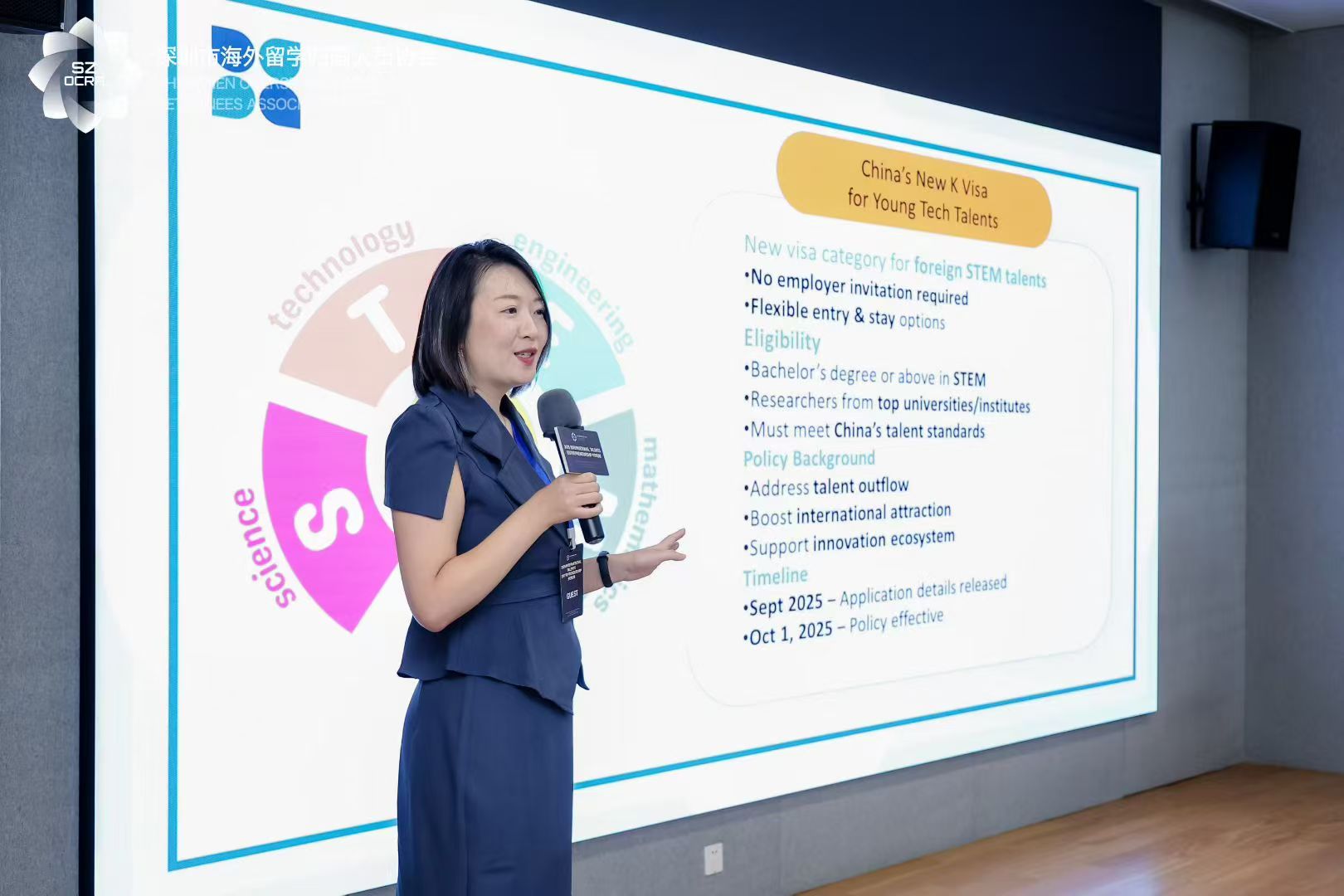
The leverage problem from labor disputes gets worse here, because the same employer who may owe you money is also the employer whose cooperation you need to legally remain in the country. These two problems, in practice, often arrive together.
Wendy's work in these situations is part navigation, part translation, literal and cultural. She knows which government counters to approach, what documentation can substitute for uncooperative employer cooperation in some circumstances, and how to build a case that moves the process forward. In her early years she would physically accompany clients to government offices. "I held their hand step by step," she says. Now she knows the system well enough to guide remotely.
But the third problem tends to arrive not at the beginning of someone's time in China, when they are most alert to what they don't know, but after they have started succeeding.
Problem three: The tax structure nobody told you about
March, every year, generates its own surge of panicked questions. How do I declare? Why do I owe extra? How do I claim a refund? Foreign work visa holders in China are legally required to file annual personal income tax declarations. Many don't know this until the deadline is approaching.
The deeper shock, for those who have started building something real, comes earlier.
"They open a company, make a lot of money, have a million in their account," Wendy says. "Then they turn around the next day and: sorry, you need to pay twenty-five percent company tax. And by the way, forty-five percent personal income tax. A lot of things are not being told. Lots of things are hidden."
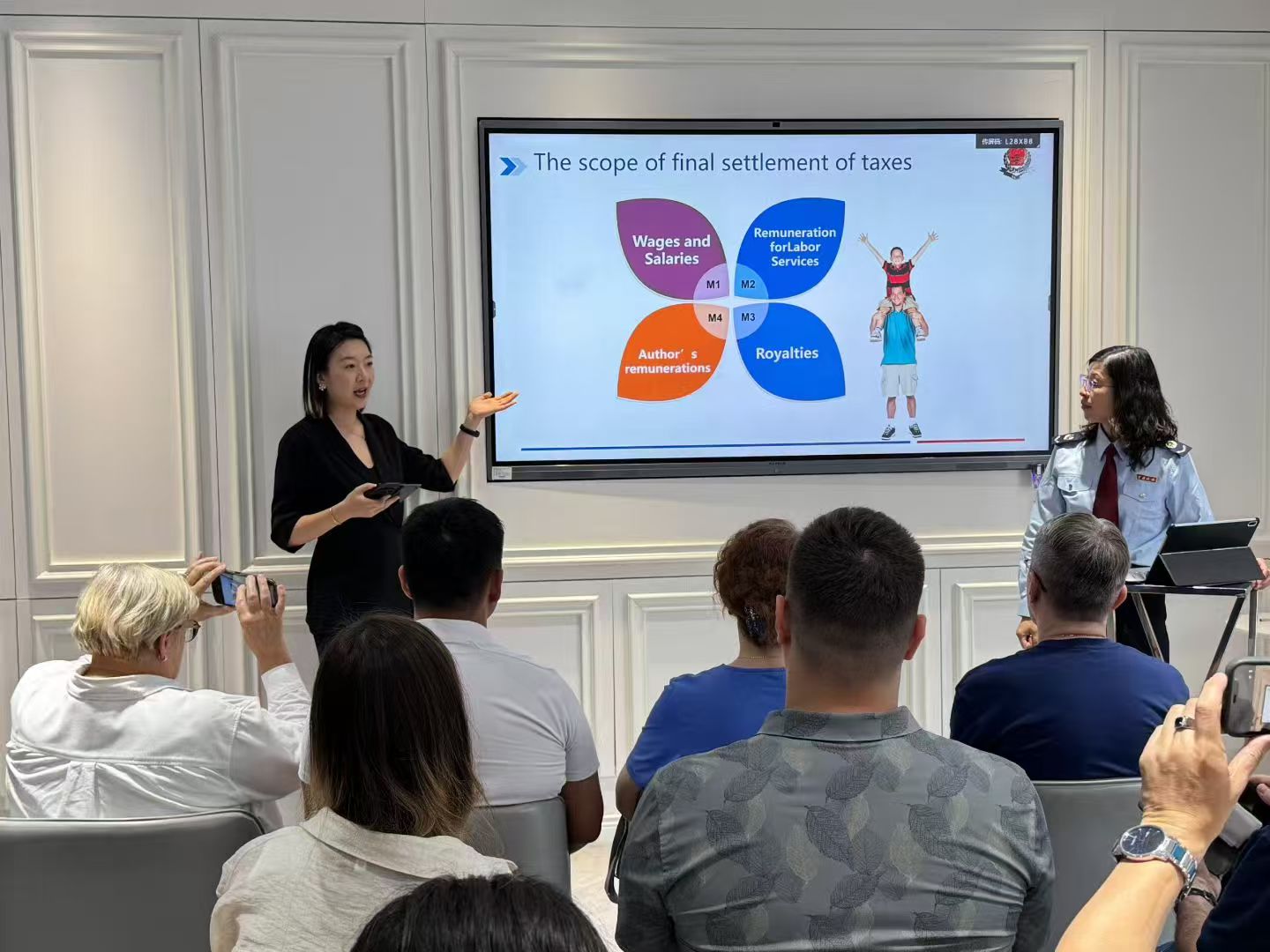
The issue is that foreign founders frequently arrive with no clear picture of what their combined tax burden will look like once both layers apply, and no sense of what legitimate structures, deductions, or planning options might affect that number. The complexity compounds for founders operating across both a Chinese entity and overseas structures, receiving income through multiple channels, dealing with treaty questions that require specific expertise.
What makes this problem distinct from the first two is timing. Labor disputes and visa complications announce themselves quickly. Tax exposure builds quietly and reveals itself all at once.
Why the same three problems keep arriving
Navigable is not the same as transparent.
The Shenzhen government has made genuine progress on accessibility. Most departments now offer services in five to twelve languages. Company registration, which once required multiple in-person visits across different offices over several days, can now be completed in a single appointment, license issued the same day, company stamp the day after.
But knowing what to expect, what to prepare, and what questions to ask before you arrive still requires either lived experience or someone who has it. Foreigners coming to China to work or build businesses frequently arrive with an informational gap that nobody in the recruitment or setup process has strong incentive to close. Employers want staff. Business partners want deals. The problems that result tend to emerge six or twelve months in, after the initial enthusiasm has carried everyone past the point where they might have asked harder questions.
"The hardest one," Wendy says, "is when they come over thinking everything is so easy. They are overly confident."

The model that followed
Careers4U now handles all three problem categories as core services: labor disputes and employment rights, work visa processing and transfers, and company registration and tax compliance for foreign individuals and entities. The growth has been entirely word of mouth.
The approach is not complicated. When Wendy takes a case, she tells the client the realistic probability upfront: sixty percent, or ninety, depending on the situation. She walks through what can go wrong. She does not promise a clean outcome.
"Most companies will say, oh, we're very confident, let's take the money and get on with it. Then halfway through there are hiccups. Surprises. The client loses trust."
A German engineer she handled for eight years, sent to Shenzhen by Mercedes to work at Denza, retired and passed her his son's contact number. His son has since started his own company. She is helping him register it now.

She is also thinking about scale, a platform that could serve expats nationally rather than just the ones who find their way to her. The challenge she is honest about is that what clients are actually paying for is access to someone who has been through the system enough times to know where it breaks. That is harder to package than a service list.
For now the three problems keep arriving, and she keeps working through them, one case at a time.
Wendy is the co-founder of Careers4U, a one-stop compliance and business services firm for foreign nationals in Shenzhen, and runs a chartered accountancy practice in Nanshan.